
Crownsof Iron
Железные короны
Three houses vie for the medieval borderlands. Grow a settlement, forge weapons from the ore you mine, and raise an army from villagers with names and families of their own.
In developmentWindows and macOS
Three houses, three ways of life
Each house has its own buildings, troops, research and a ruler who rides into battle in person. No two buildings are alike: a sawmill is a sawmill everywhere, but each house builds it its own way.

House of the Grey Wolf
“While the hearth burns, the house stands”
Log halls and stone walls, a prince’s retinue in iron: a shield wall and knights in a wedge.
- Knightly order: footmen with shields form a wall that takes frontal arrows at half strength, and a knight’s lance charge hits three times harder.
- The heaviest armour: swordsmen, men-at-arms, crossbowmen and standard-bearers are theirs alone.
- They build to last: 15 % slower, but a fifth sturdier. Stone, towers and catapults are their craft.
- Winter holds no fear: frost saps less strength, hearths need less firewood, and they see farther in forests and at night.
- Knight
- Swordsman
- Man-at-arms
- Crossbowman
- Pathfinder
- Wolfhound
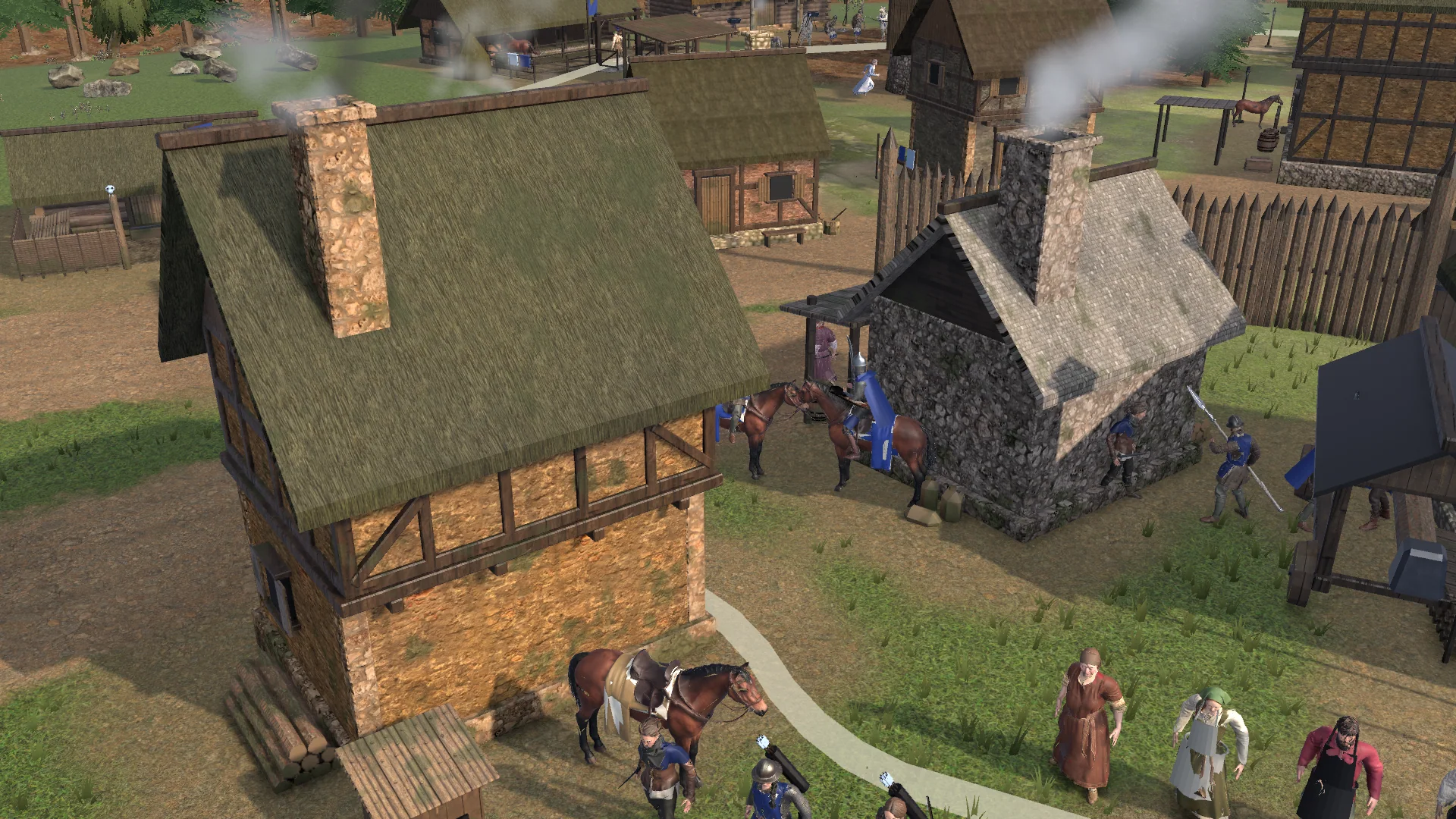
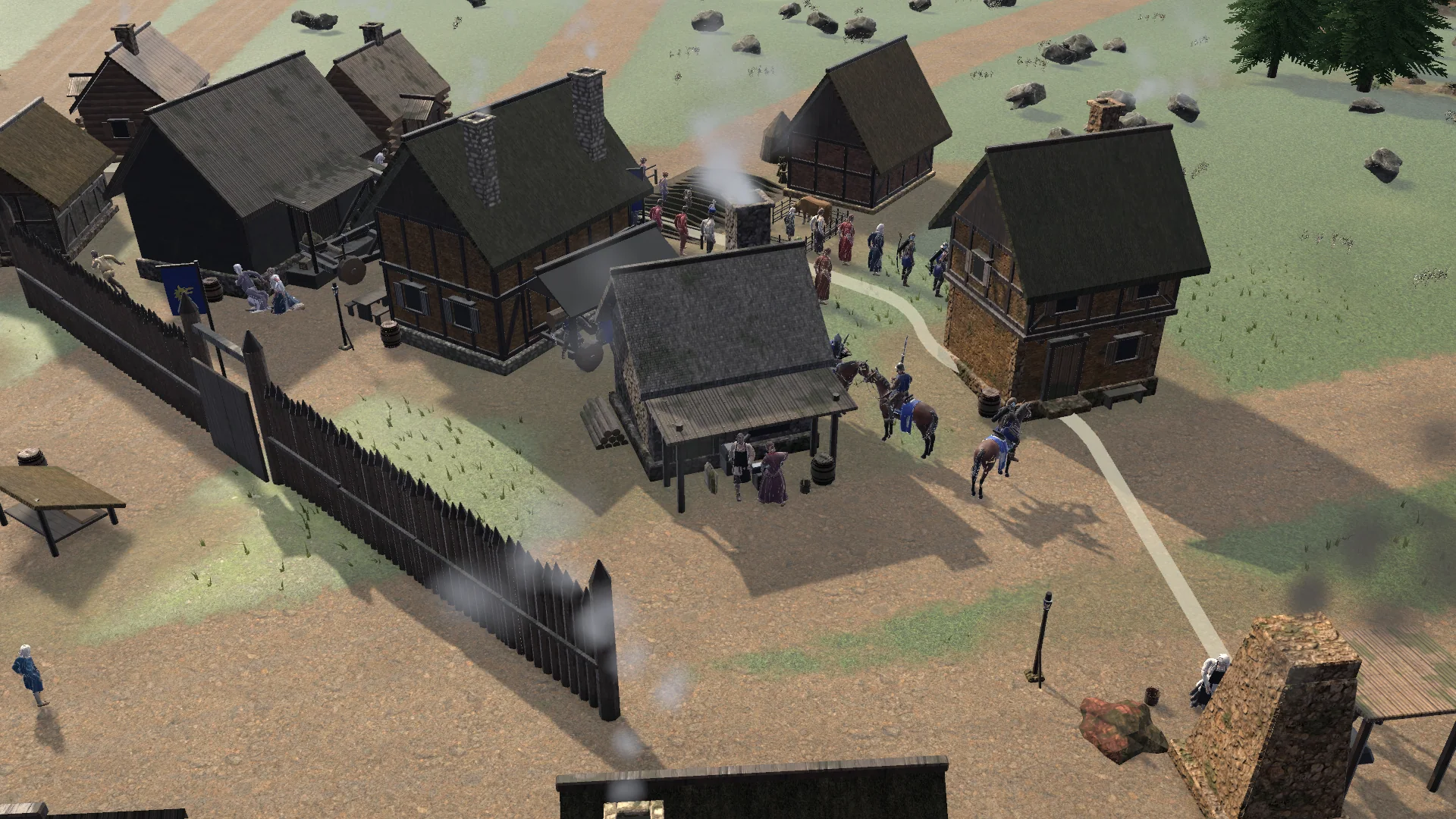
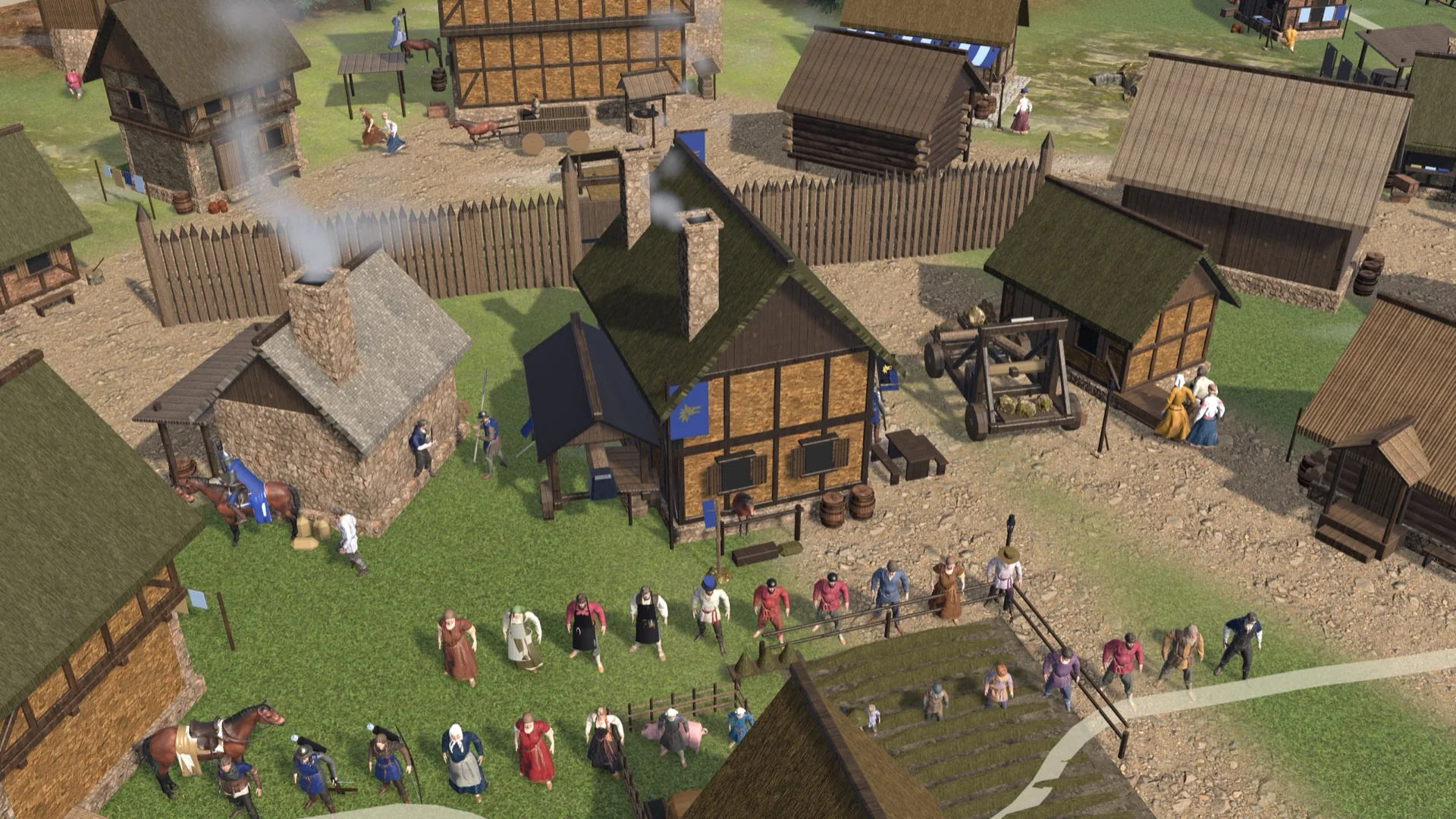
In-game screenshots
See the three houses’ settlements, winter in the North and stone defences in the current build.
Every soldier is somebody’s son
Barracks don’t hire strangers. Ordering a soldier calls up one of your own people — volunteers first, then the unmarried. They go to war with the same name, family and story, and when they fall, a family loses its provider: only growing families bring new people.
- 12
- settlers at the start
- Three families, an old man and two loners
- 1 in 2
- of the fallen survive
- The wounded are carried off and heal at home
- 0
- soldiers out of thin air
- Every fighter is a villager who could be ploughing
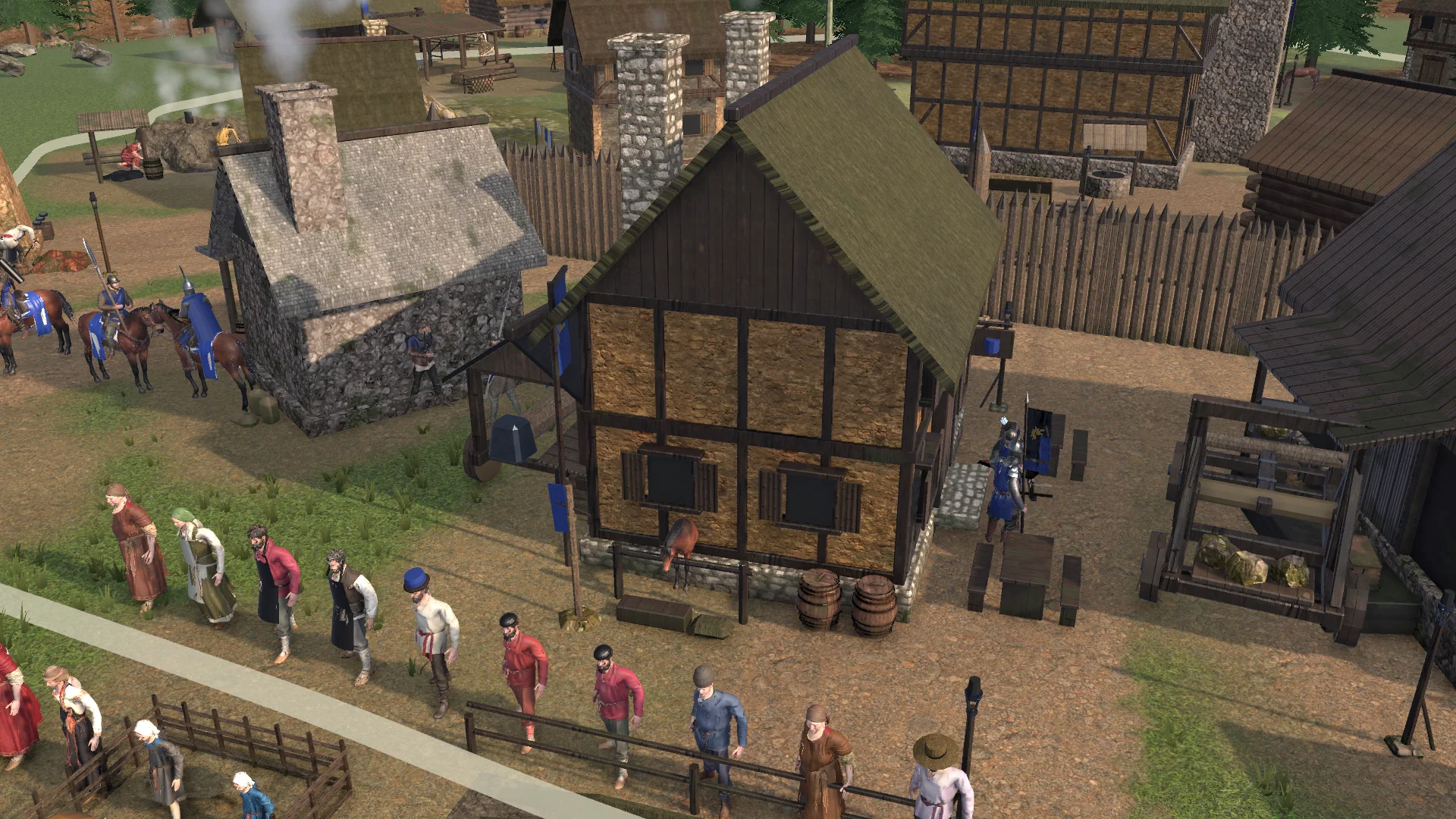
Families and purses
Each family has its own purse and its own needs — bread, firewood, clothes. They buy them at the shop with what they earn, and want shows at once: on the person’s card and above their head.
Sickness and the herbalist
Colds come from unheated huts and frost, fever from hunger. From spring to autumn herbalists gather herbs, and when sickness comes they go from house to house with remedies.
A ruler of flesh and blood
Your ruler is an ordinary person from your own folk, with a temper of their own. They age and may fall in battle — then the council picks a successor, and unrest begins.
Experience and ranks
Soldiers rise through the ranks. Released from service, they return to peaceful work with battle experience; the wounded come back as workers until they heal.
A sword begins with a log
Nothing comes from thin air. Every log, sack of grain and iron bar is carried on someone’s back or hauled by cart — and a workshop stands idle until the charcoal arrives.
- Logssawmill
- Charcoalcharcoal kiln: 3 logs → 2 charcoal
- Ironsmelter: 3 ore and charcoal
- Swordforge: iron and charcoal
Carriers and carts
A storehouse is only as full as the carriers can make it: every load is carried by someone, and carts and roads speed up the haul.
A living market
Every market sets its own prices: scarce goods get dearer, gluts get cheaper. Bread costs more in winter, weapons in wartime. You can only buy what someone has brought.
Merchants and the trade road
You build the shop; a family runs it with its own money. The merchant looks for cheap goods and eager buyers and only sets out when the trip pays.
Workshops speak plainly
Ask why a workshop is idle and it tells you: “waiting for charcoal”, “no workers”, “nowhere to put the goods”.
A wall holds while people stand on it
Stone walls in three sizes, stairways and a wall walk, gates with a gatehouse. An arrow shot from the ground over a wall almost always hits stone, while defenders on top shoot as usual — so attackers have to build.
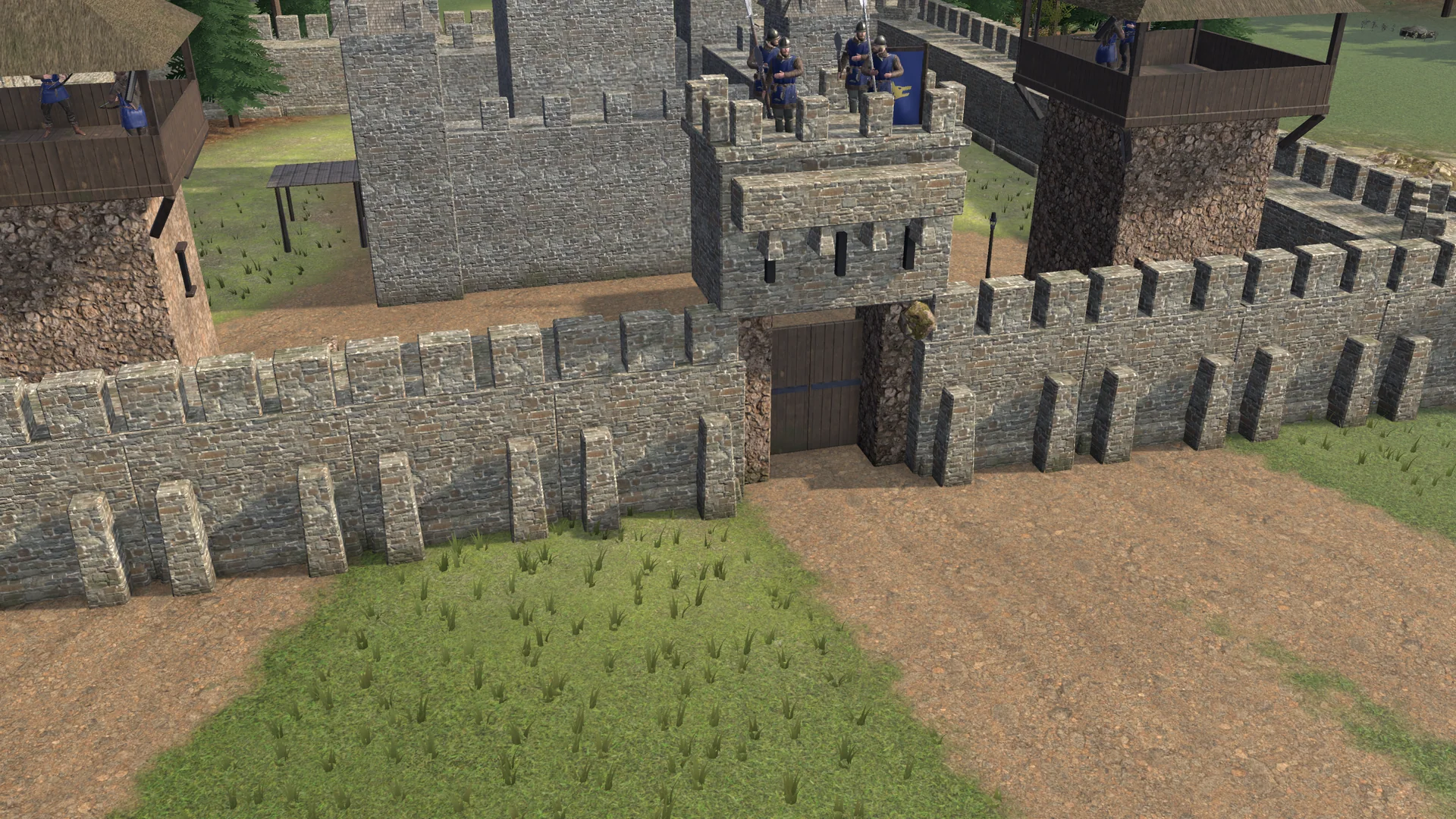
Ladders from hauled logs
Scaling ladders don’t appear by magic: they are knocked together in the field from logs brought up by cart.
Siege towers and mines
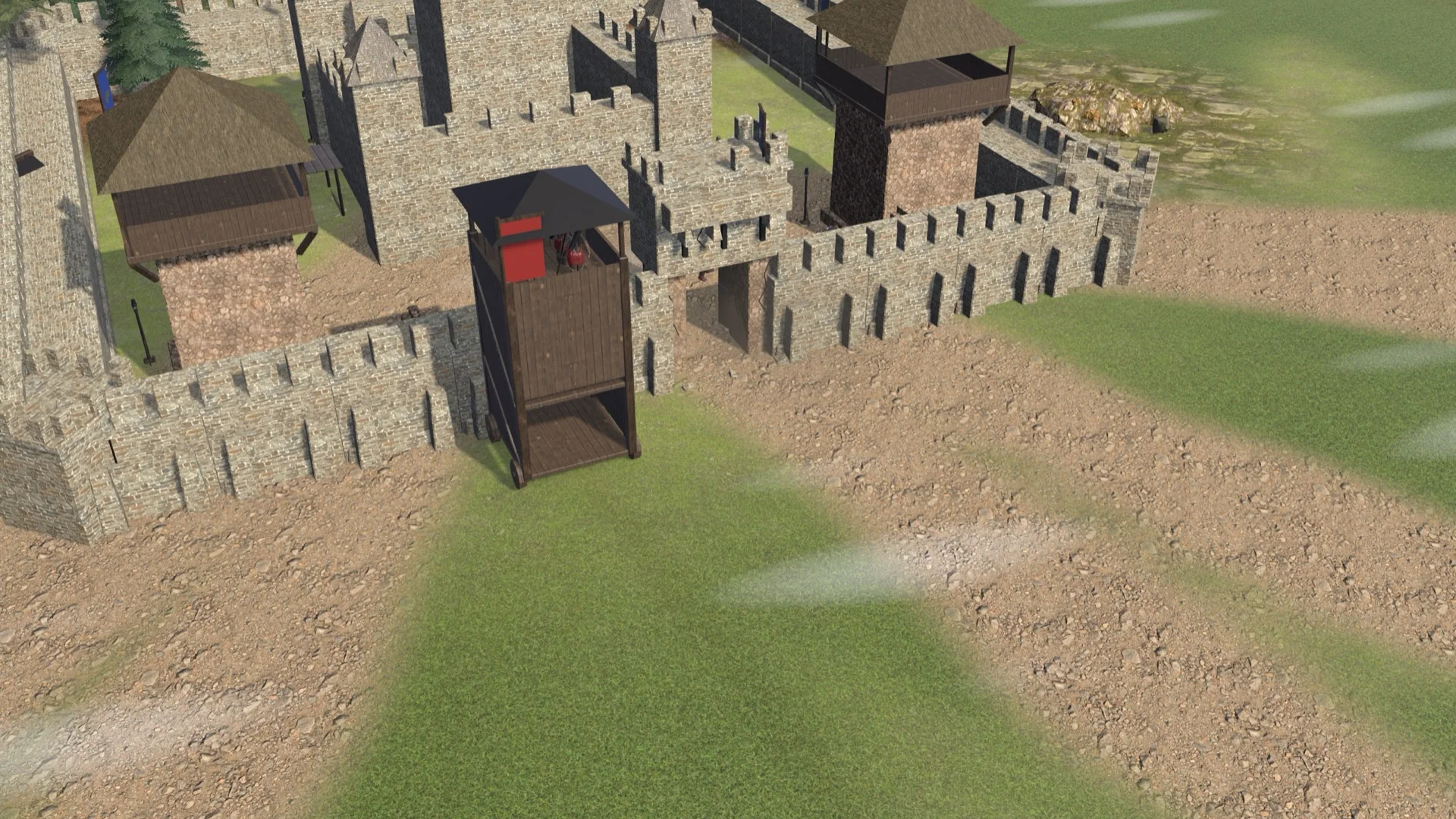
A tower is rolled up to the wall to drop a squad right onto the wall walk; a mine is dug beneath the masonry itself.
Breaches
Walls crack in two stages before collapsing into a breach. Rubble halves everyone’s pace, and nearby defenders step into the gap on their own.
Gates and sorties
Gates open on their own, for a sortie, or stay locked. The gatehouse pours pitch made from hauled firewood, and infantry hurl stones.
A castle of your house
A fourth-level Hall gets its own ring: a castle for the North, a wagon ring for the horde, a stockade fort for the forest folk.
Each house’s tricks
The North advances in a shield “tortoise” and raises trebuchets, the horde lassoes palisades and defenders, the forest folk vault their way over stockades.
The AI builds its own ring of walls, mans them, and when it lays siege it fights to the capture instead of making peace at the gates.
Four seasons and a new land every game
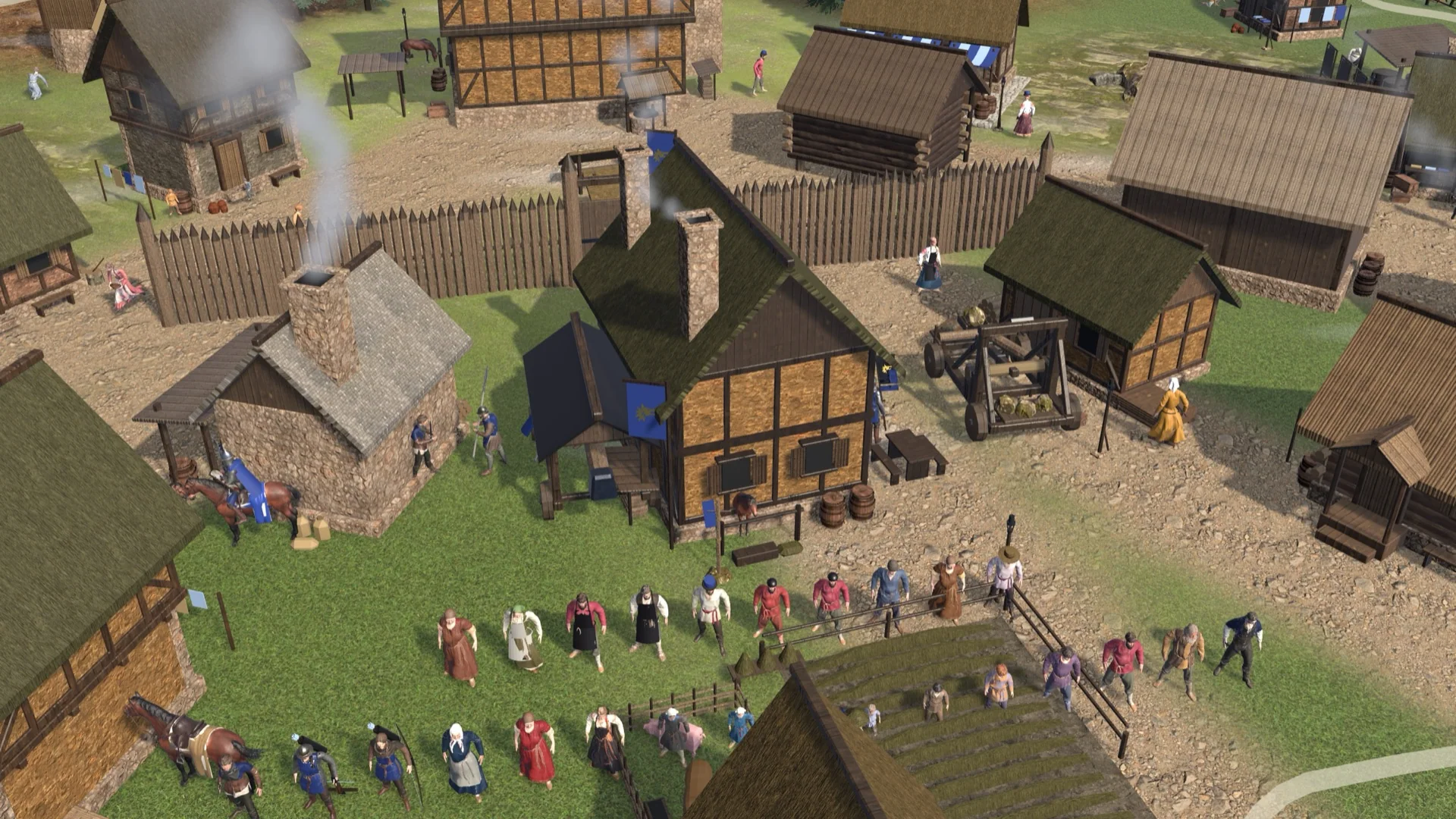
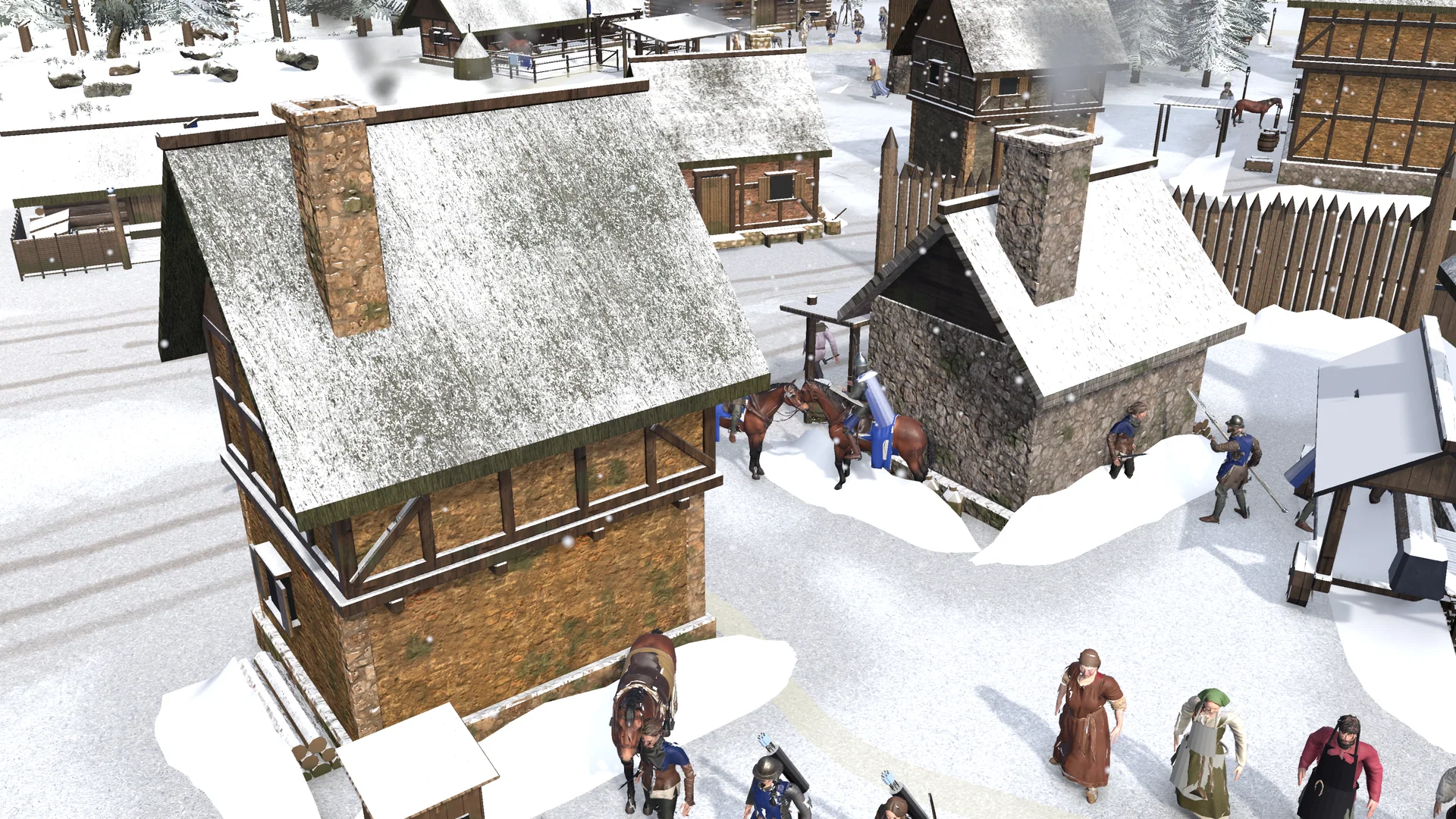
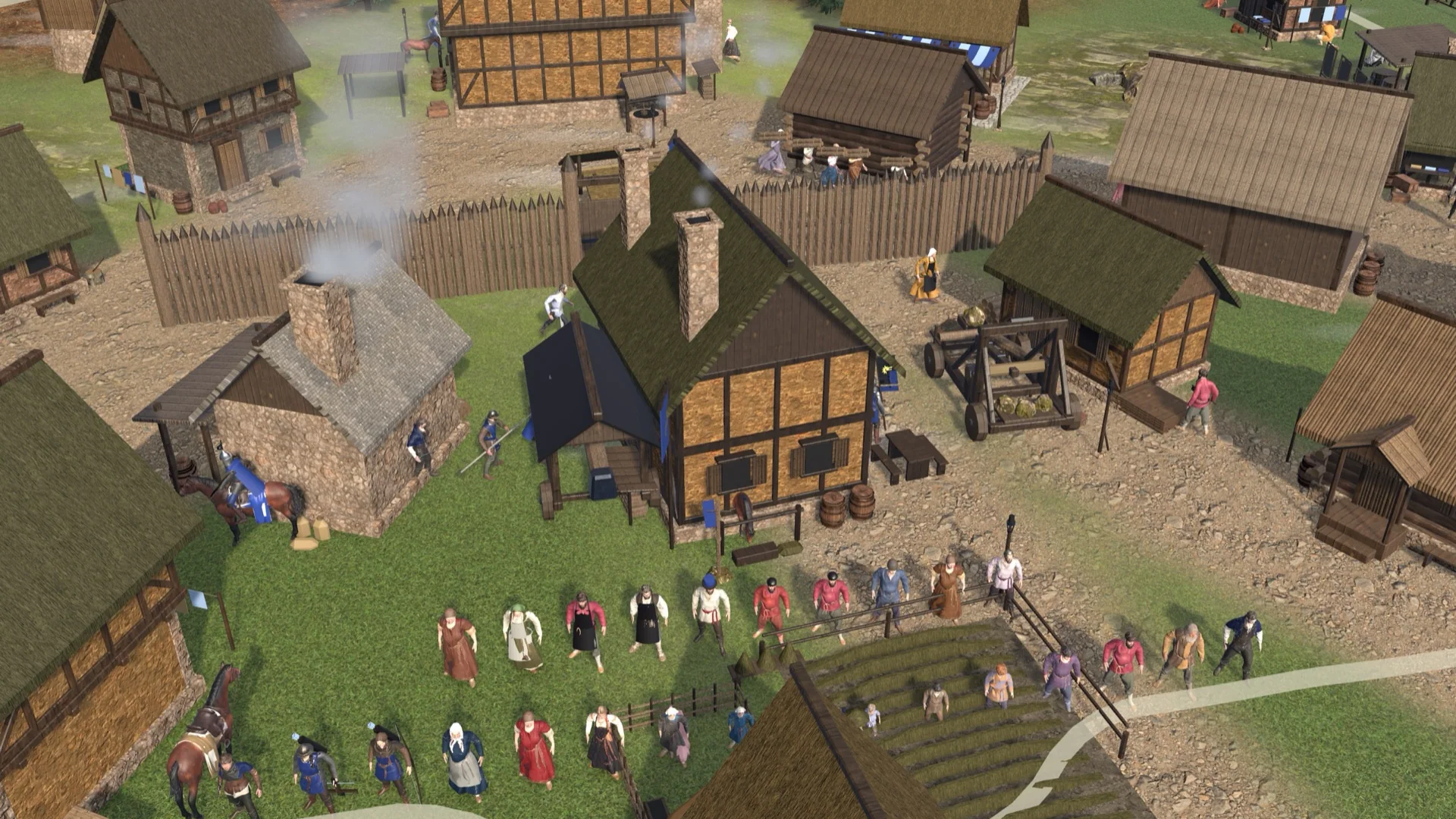
Day and night, weather and seasons change everything: how much the fields yield, how far you can see, how far an arrow flies and how much firewood the winter eats.
Autumn
fields ×1.3
Harvest: fields yield a third more. Time to store grain and firewood — the leaves turn yellow and a long winter lies ahead.
Weather
- Clear
- Overcast
- Fog
- Rain
- Downpour
- Thunderstorm
- Snow
- Blizzard
- Heat
Fog, downpours and blizzards shorten sight, rain weakens arrows, snow slows the march.
Maps
- 600 m
Borderland Vale
A narrow valley: bases face to face across a river with three fords.
- 1200 m
Lake Frontier
A lake with a golden island and a shoal across it, ridges and passes to the north and south.
- 1200 m
Blackwood
Deep forest: bases in clearings, a river and cuttings. In the thicket you walk slowly and see little.
- 1200 m
Stone Belt
Three ridges with gorges and staggered passes: plenty of stone, little gold.
- 1200 m
Wild Field
Open steppe with burial mounds, salt lakes and a broad river. No forests at all.
- 1200 m
New Land
New every game: the region and the seed draw rivers, fords, ridges with passes, roads and old landmarks — a barrow, a watchtower, a shrine, a mill, a bridge. The great features are the same for both sides.
An enemy without handicaps
Difficulty means better decisions, not bonuses. The AI doesn’t see through the fog of war and gets no resources beyond what it gathers — a dedicated test checks it. It saves up for its Hall, keeps food for the winter, rests its army before a campaign and raids your workers.
Three temperaments
- MerchantGrows rich, strikes late and hard.
- WarlordEarly pushes and raids.
- BuilderTowers, walls and counterattacks.
StrengthPeaceful neighbourCautiousNormalRelentless
War only by declaration
At first you don’t know who lives across the river. You learn your neighbour’s name when your people first meet; then come non-aggression, a trade route, friendship, alliance — or war. Armies fight on their own only in wartime.
- First contact
- Neutrality
- Non-aggression
- Trade route
- Friendship
- Alliance
- War
- Tribute
Eight missions for the Northern House
From the first smoke above a log house to storming an enemy Hall: the campaign takes you through the economy, winter, trade, defence and war.
First Smoke
A sawmill, farm, mine, charcoal kiln, smelter and forge — and two soldiers with swords of your own making.
Bread and Stone
A gold mine and a quarry, stocks of ore and stone, a storehouse, a carpentry and a second-level Hall.
The Long Winter
Firewood, grain and warm homes: family needs stay above 80 % all winter long.
The Trade Road
A market, 200 coins of turnover, iron off the stall and an outfitted cart.
Holding the Ford
Two towers, a squad of ten and twelve minutes under the onslaught of the Steppe Horde.
A Neighbour’s Word
From a grudge over a disputed meadow to non-aggression, a trade route and friendship with the forest folk.
Lake Frontier
A scout, two outposts and the search for the horde’s camp on a large map.
The Frontier
Three technologies, an army of fourteen and an assault on the enemy Hall.
Skirmish
Your House and your rival’s, the map or a new land, the enemy’s temperament and strength, starting stocks, speed, bandit camps and the victory condition: raze the Hall, destroy the economy, gather 6000, or lead on points at the twentieth minute.